
Case Study: Tamera
a ~170 person community in rural Portugal dedicated to exploring love, intimacy, and governance

Editor’s note (Gillian): this is a guest post from Sharon Avraham, founder of Togather, where he has been documenting intentional communities over 15 years.
At Supernuclear we feel we have to wrestle with the common misconceptions about communal living, exemplified in a recent NY Times comic by Alison Bechdel. So we don’t often feature communities like the one below, which plays into some of the stereotypes.
Yet leaving Tamera out of our canon of case studies would be a mistake. It is renowned for its staying power (30+ years), its reach (thousands of people have lived and attended workshops here) and for its reputation as a sex-positive enclave. Their radical approach to governance and sexuality is not for everyone, but many see it as transformative. We’re grateful to Sharon for this deep dive with insights from the founders and some long term residents.
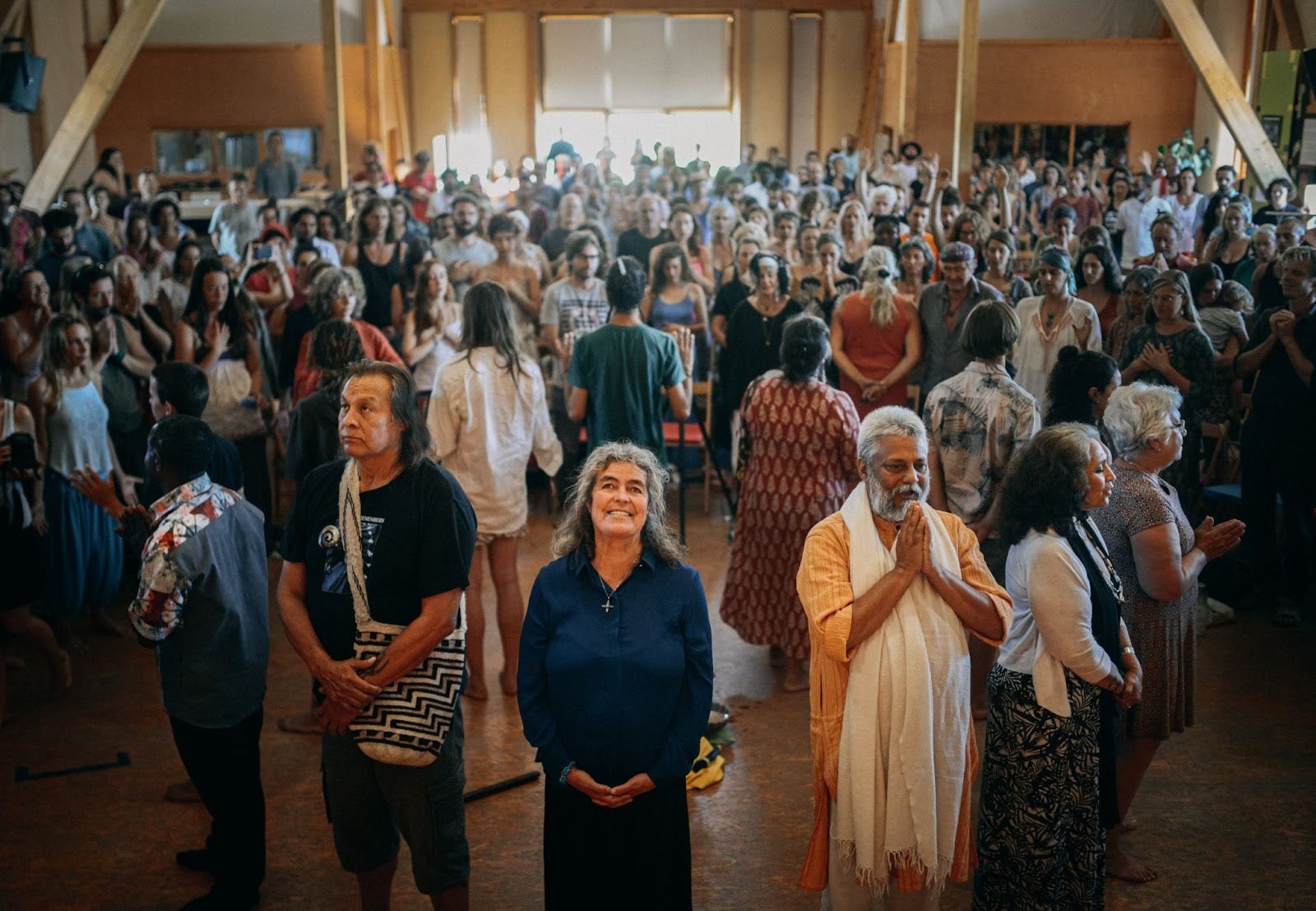
Founded: 1995
Location: Alentejo region, southern Portugal
Ownership: Two nonprofit associations, joint ownership
Size: 335 acres, up to 250 residents
Governance: Weekly plenary; Finance Council (vision) + Finance Committee (day-to-day)
My first encounter with Tamera was in 2019, at a gathering of indigenous leaders following the Standing Rock campaign, an event called Defend the Sacred.
Tamera is an eco-village building an alternative life, exploring how love and intimacy can strengthen communities, alongside deep ecology and a global mindset toward activism. I was caught off guard by how seriously people took all of it. I kept coming back in the years that followed. Tamera is one of the few places I have found, across fifteen years of fieldwork, where the question of what it actually takes to build a different kind of life together has been treated not as a theory but as a decades-long, ongoing test.
The project had started in the late 70s in a rented farmhouse in southern Germany, with twelve people paying 500 marks (about $290) a month. Sabine Lichtenfels and Dieter Duhm had come from the political left with one central question: what kind of culture actually produces no war? Half the day was research, the other half was figuring out whether twelve people with strong ideas could actually live together, which turned out to be its own research project.
“We noticed that the story of competition and all those things are quite deep. If we want to build a free university and community, we have to focus also on the social questions.”
Sabine Lichtenfels, cofounder
The group moved through Germany and then Austria for fifteen years. By 1994 Sabine felt the need to move due to rising criticism in the local media framing them as a sex commune and prices going up, and she went searching for land elsewhere.
When I sat with co-founder Sabine Lichtenfels in a community building she calls the Grace House, she walked me through how they found the land. It was 1994, a piece of farmland in the Alentejo region of southern Portugal. The owner could no longer afford to maintain it, and a local shepherd had walked her to a spring on the property. She sat there for a while.
“It was fully clear. This is the place where we are called to be.”
The bank was days away from taking it, and she had one week to commit to 335 acres. She called her community. They decided to go for it.
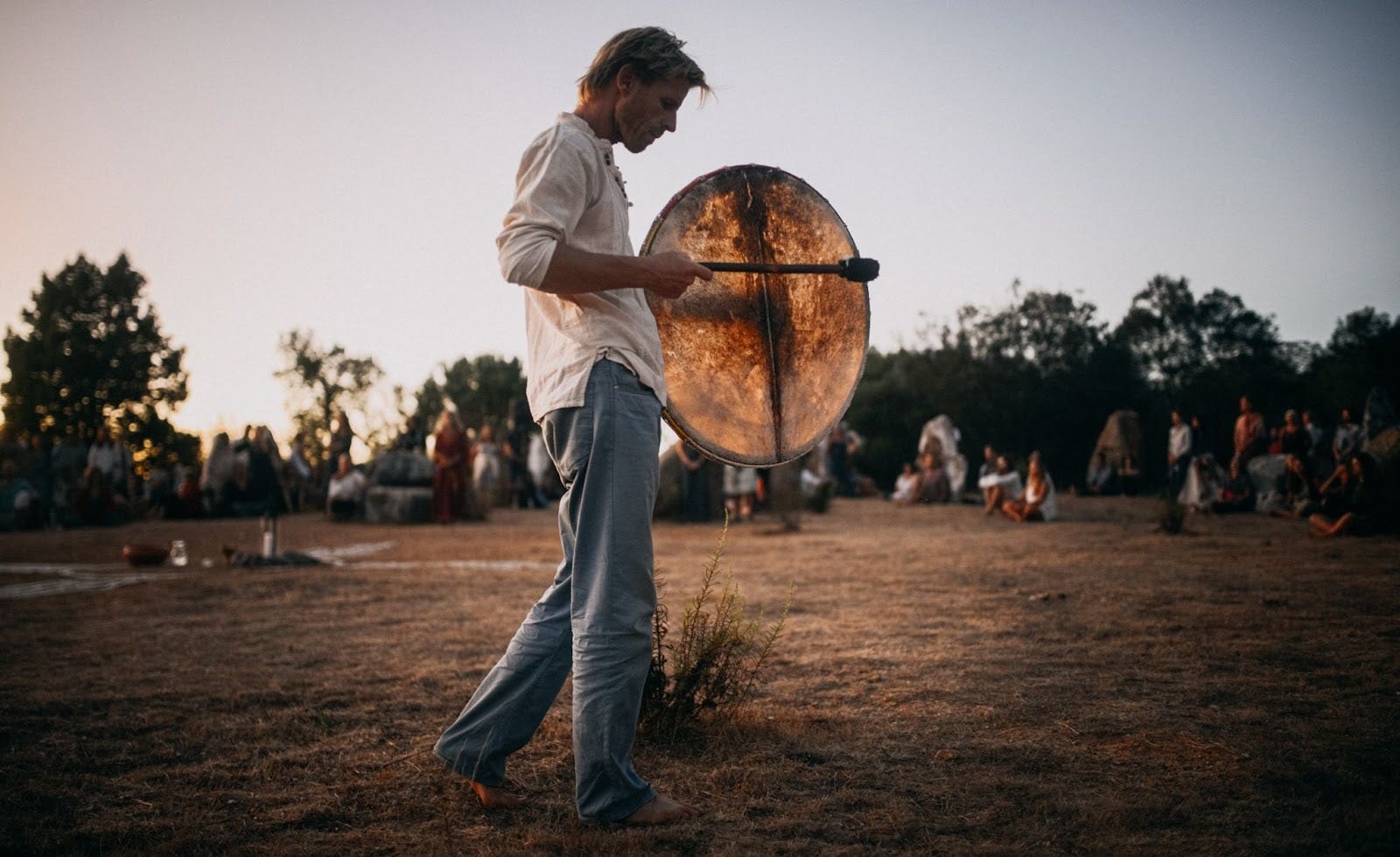
THE CENTRAL QUESTION: Freeing love from fear
What separates Tamera from most intentional communities I have visited is how seriously it treats love, intimacy, and sexuality as structural and political questions, not private ones. When Joshua Gottenko, who has lived at Tamera for nearly two decades, described what drew him there, he did not start with the land or the governance. He started with a question the community has been sitting with since its earliest years:
“Why can an embrace between two people create pain and suffering in a third person? Why is that possible? And they have decades of experience searching for real answers to those questions.”
Joshua Gottenko, resident since 2007
The founding phrase he kept returning to was “freeing love from fear.” He said it was the sentence that made him stay.
Sabine put it plainly in the opening talk of the Global Love School in 2012: “Love and sexuality are political issues. There’s an emergency call to end the war dynamics in our love relationships that makes us see each other as enemies.” For the people who built this place, that is not a metaphor. It is the organizing thesis.
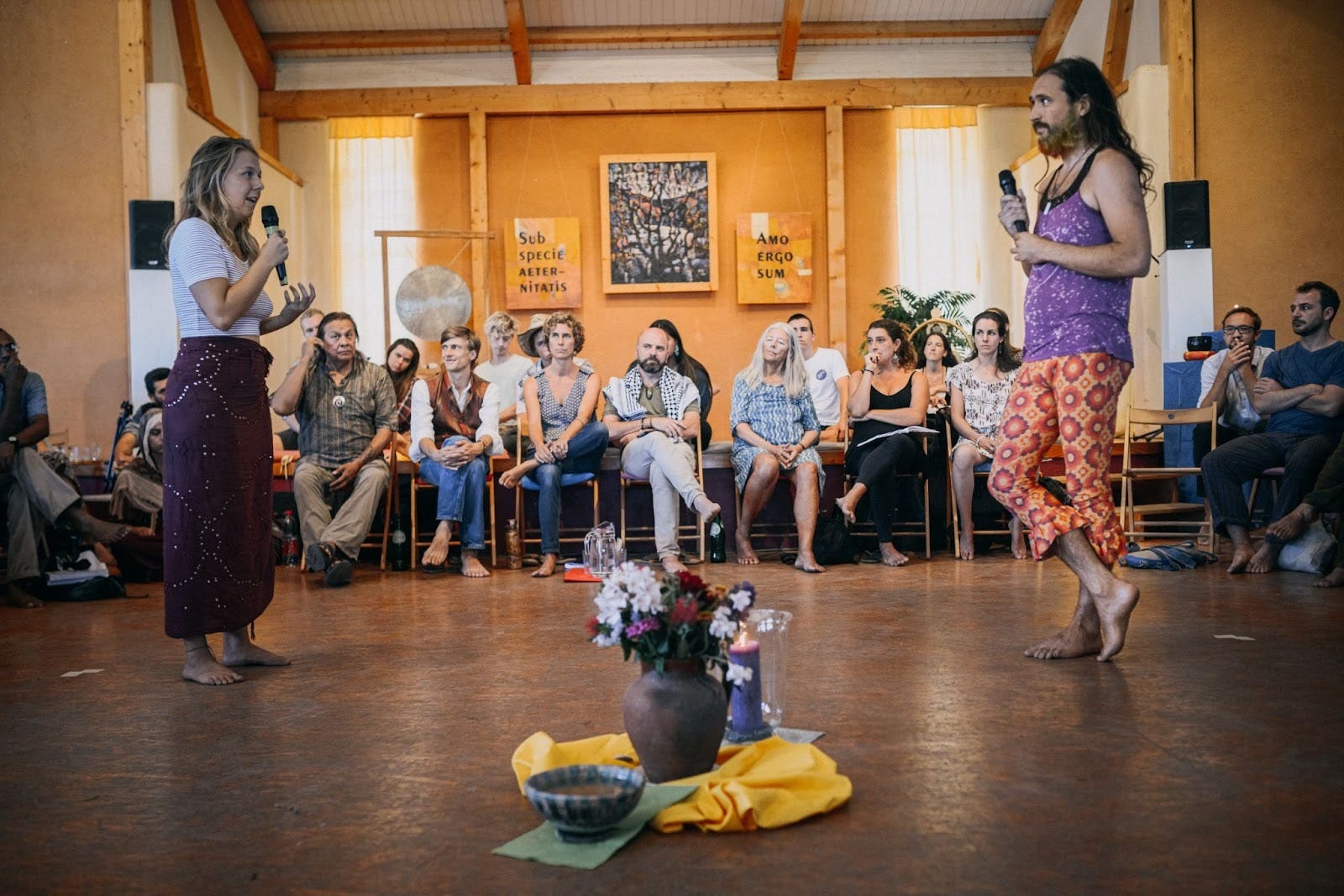
The Forum is the main practice through which this gets worked. Someone stands in the center of a circle and brings what they are actually carrying, whether jealousy, fear, rage, or grief, and the community witnesses without judgment. The practice grew directly out of the early years in Germany, when the group began to understand how much of their dysfunction came from what nobody was naming.
“There is something in the culture that allows letting go of secrets, that does not include secrets as part of the culture. The Forum was home for me, the allowance to be truthful with each other, in the performance and in the feedback.”
Uri, resident since 2006
Joshua described how the community has moved through different phases in its relationship to love and intimacy: the early years were about liberation from social norms, and later came a phase that actively encouraged deeper partnership. The current moment, as he sees it, is more complicated, with younger members bringing trauma-informed frameworks and attachment theory into a community where the founding generation did things very differently.
“The younger ones want recognition. The elders can feel judged. It feels like a family dynamic.”
Joshua Gottenko
That tension, between the freedom older members built and the relational depth younger ones are asking for, is something I heard in different forms across multiple visits. It is not resolved. That, in a way, is the point of the place.
HOW IT RUNS: Water, money, and a 1.2 million euro question
Walking around the land, what struck me first was the water. Tamera built a series of lakes across what was once severely degraded farmland. These are working lakes, not decorative ones, that recharge the groundwater, reduce erosion, and now supply the community entirely in a region where water is not a given.
Plus, the community runs at around 80 percent energy self-sufficiency through solar panels. On food, they are candid about the gap: less than 20 percent is grown on site.
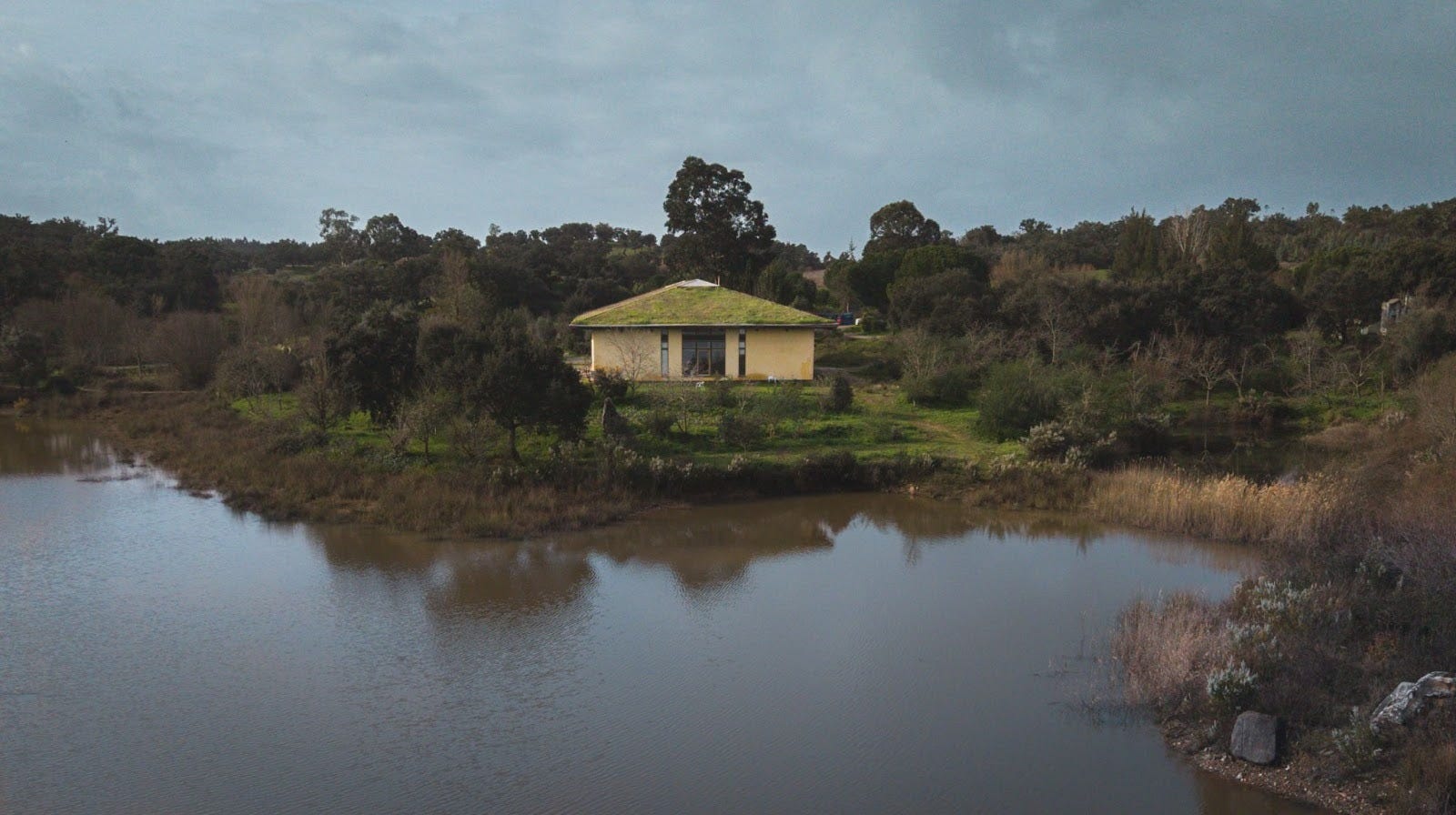
I find the financial model harder to summarize than most. The community sustains itself by teaching what it lives. People come from around the world to study here, some for a week, some for months, working in the kitchen or on the land while learning Forum practice and community principles alongside daily life. The Love School and Global Love School apply the same questions about love, sexuality, and intimacy that the community is working through internally to people who are not yet ready to move there through multi-day workshops and online courses.
The research and the education are the same thing. Together with donations from a global network of supporters, these programs generate the roughly 1.2 million euros the community turns over annually.
For permanent members, the internal economy works differently from anything I have encountered elsewhere. Housing, food, childcare, and basic healthcare are covered collectively. On top of that, each person receives up to 200 euros a month for incidentals. The work that keeps the place running - cooking, translation, maintenance, and medical care - is contributed rather than paid.
The land is held in joint ownership by two nonprofit associations, meaning it cannot be sold out from under the people who live there. That detail has ended many communities. Here it was built in from the start.
THE PEOPLE WHO STAYED
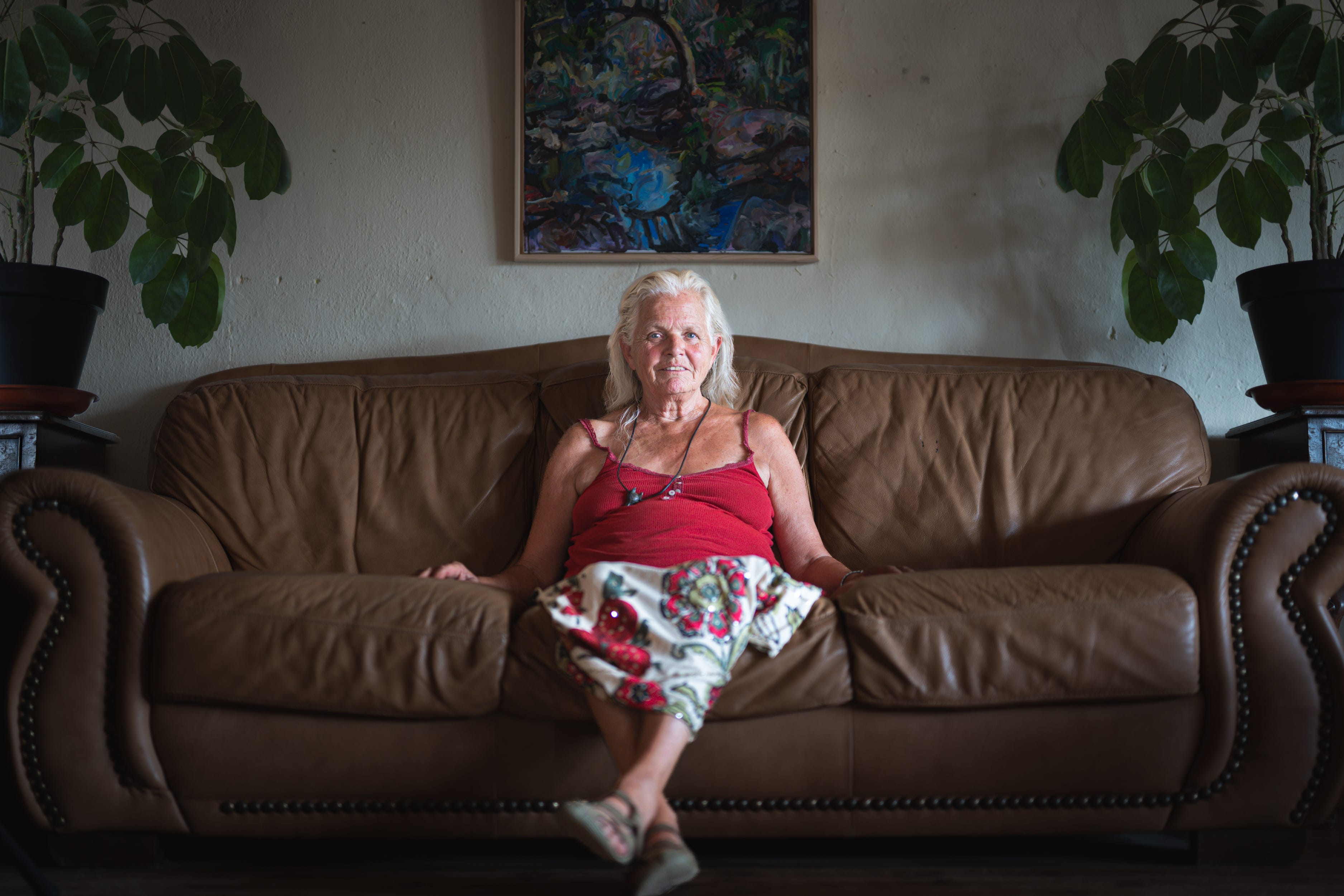
Bori
Bori joined the project in 1987, before it had the name Tamera, when she was 27 and in two kinds of trouble. The first was political: she had been fighting to protect green spaces from development in Switzerland, then sat across a table from the developers and felt something clarify in her.
“If I continue to work like this politically, I will end up inwardly like them.”
Bori, resident since 1987
The second was her love life. She had been quietly non-monogamous for years, navigating it alone, without language or community for it, causing harm and feeling guilt while still being drawn to a different kind of living. When her partner met a woman at a public swimming pool who mentioned a community experimenting with exactly this, he called Bori, and she went to visit.
Dieter Duhm spoke about how a small group of people could have a real impact on a larger change; Sabine spoke about something simpler. “You are allowed to have contact,” she said. Bori, who has just signed a contract for a new job, just dropped everything and joined them.
She is still at Tamera. That is thirty-eight years.
Aida
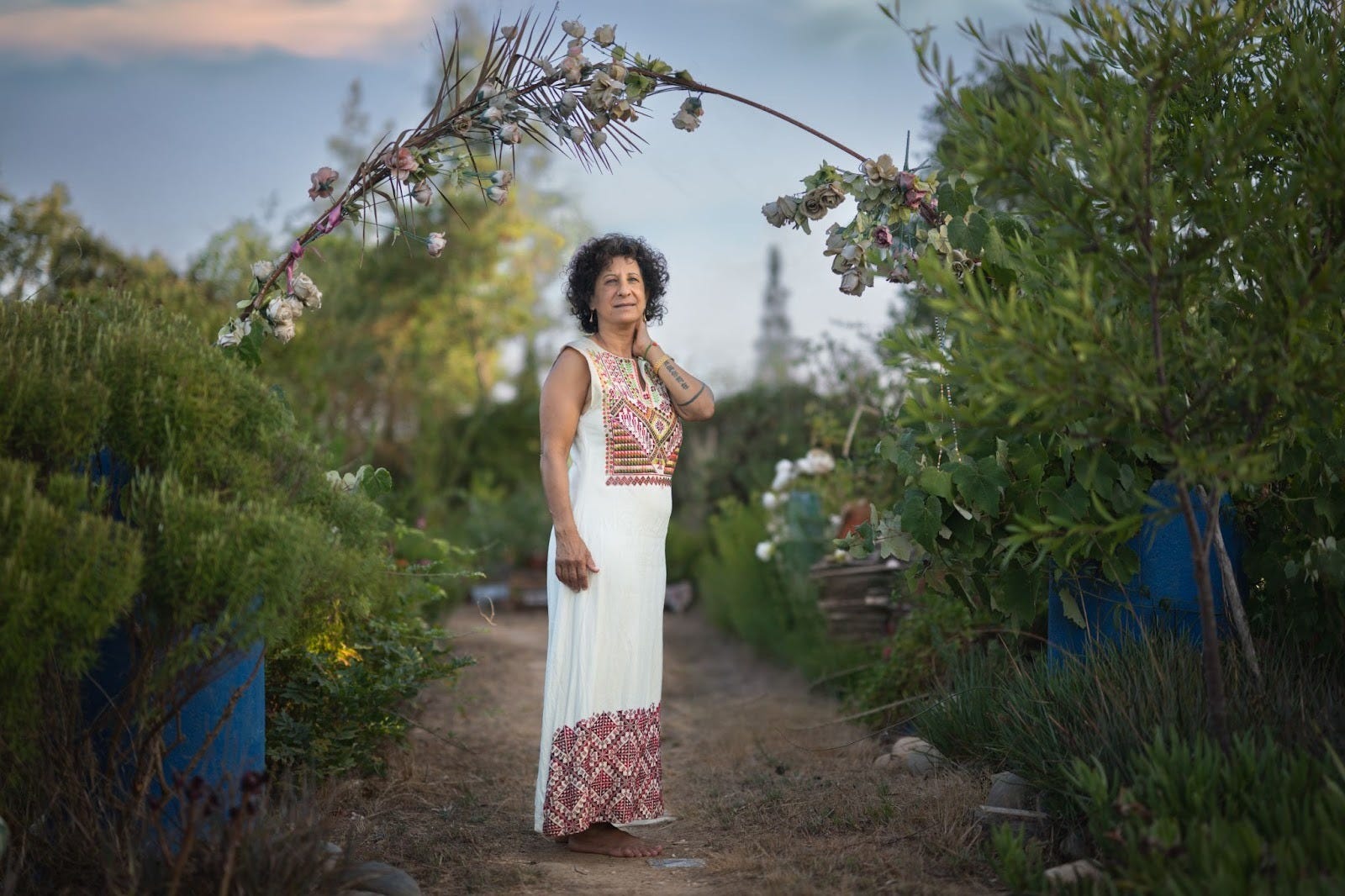
Aida Al Shibli’s path here looked nothing like Bori’s. She is Palestinian, born in occupied Palestine. By the time she was an adult, she was a political activist, a feminist, a single mother during the second intifada in Jerusalem, standing next to walls and checkpoints when people from Tamera first approached her and described living close to nature in southern Portugal and researching the topic of love. “What can love do?” she thought. She said no for three years.
Then the founder of Tamera sent her a letter listing eleven specific points about how her presence, as a Palestinian woman, could serve her cause. It spoke to her. She came, and that was 2006.
What she did not expect was what would shift: she arrived believing there could be no peace without justice, and she still believes in a free Palestine, but living with Israelis and Palestinians together, navigating what she describes as the systems of neocolonialism and patriarchy that surface even among people who are trying, moved something she had not thought was moveable.
“If I can choose between justice and reconciliation, I would choose reconciliation.”
Aida Al Shibli, resident since 2006
OPENING THE GATES
For most of the past fifteen years, Tamera has been closed to new permanent members, and most of the criticism I used to hear was that “Well, Tamera is great, but it’s a closed community”. They’ve been navigating a decade-long zoning process with Portuguese authorities, unable to legally build or expand, which made welcoming new members complicated. That is now changing. After investing around 200,000 euros in what they call the PIER process, they expect to receive a special permit in the coming months that will allow them to legally expand the village, plan new communitarian housing, and update existing buildings.
Alongside that, they are opening a structured three-year pathway for new members for the first time since the early 2010s.
Tamerians will tell you themselves: the community is still mostly white, European, and German-speaking, with relatively few Portuguese members and a largely cis and straight profile. They are working to change this. Their call for new members includes a particularly warm invitation to BIPOC people, Portuguese citizens, and queer and nonbinary applicants. They are also looking for specific skills: ecological regeneration, renewable energy, healthcare, education, building and maintenance, IT, and communications.
For me, this is exciting news! Tamera is definitely not for everyone, but if you wish to be part of the frontier of what is possible when you allow yourself to think, act, and imagine a radical new way of living on earth. Tamera, with all their struggles and challenges, is still the place to do that.
About ToGather
These interviews are part of the ToGather archive, a fifteen-year field research project documenting how intentional communities around the world govern themselves, share resources, and stay together over time. The archive holds interviews from more than thirty-five communities across Europe, the Middle East, and beyond. You can explore it at togatherproject.eu.
 | A guest post by
|
Such a well written piece and beautiful glimpse into this iconic community! Thanks for bringing this together Sharon!