
Going ‘Post-Communal’
Long after leaving coliving, certain values and habits persist

This is a guest post from Carly Schwartz, a San Francisco-based journalist and writer who chronicles her communal living experiences in her new memoir, “I’ll Try Anything Twice: Misadventures of a Self-Medicated Life.” (note from Gillian: I’ve read it, it’s great!).
While we believe that some form of communal living makes sense for every stage of life, what that looks like might change over time. Carly spent seven years at a fifteen person communal home, and now lives with just two others and her dog. Below, she and her old housemates expand on the ways their time at the big house continues to reverberate in their lives.
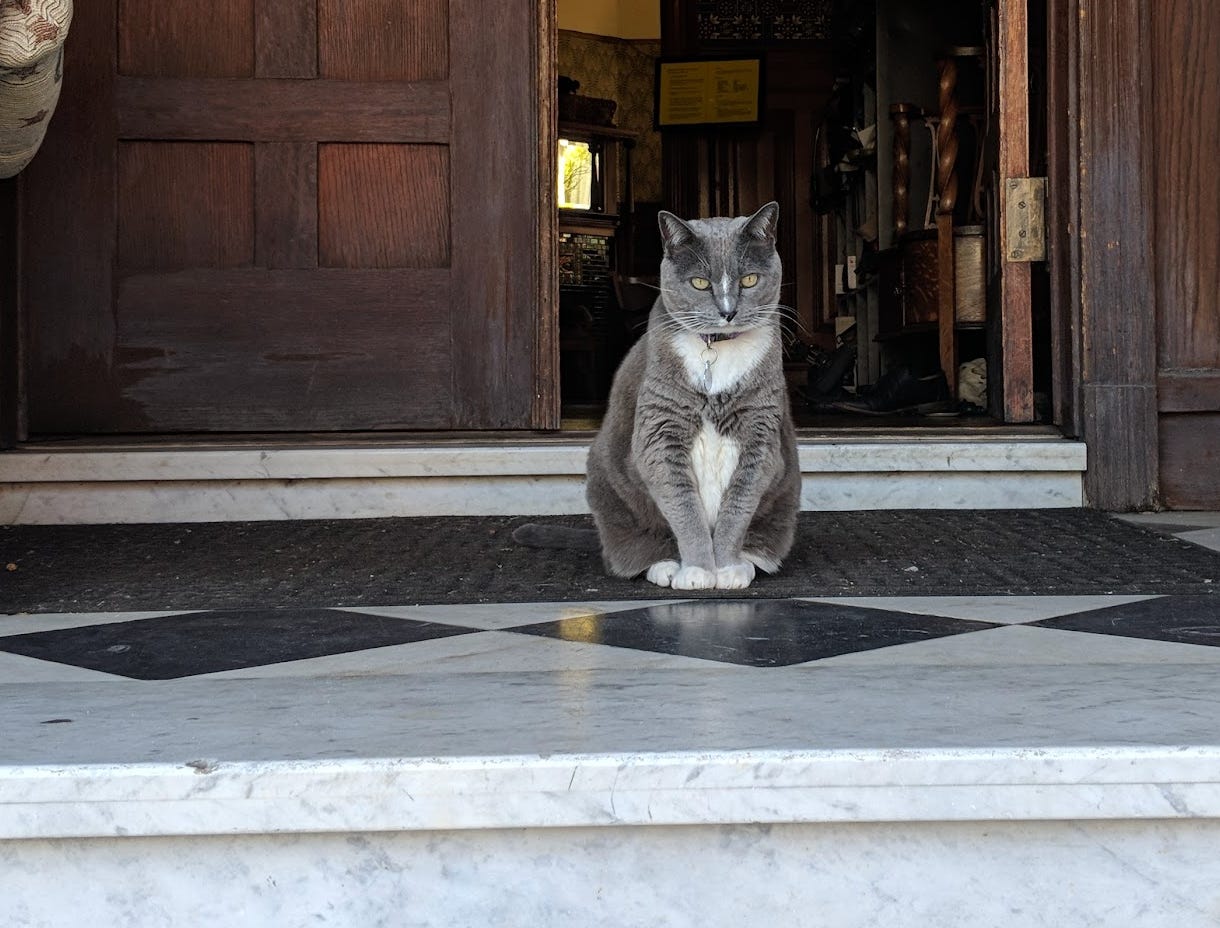
When my best friend offered me a room in her 15-person communal house in San Francisco’s Mission District, I balked at the idea. I’d just moved back to the U.S. after a disastrous year in a Panamanian eco-village, with nowhere to live and a negative credit card balance to my name. “I wouldn’t be able to afford it, anyways,” I told her by way of excuse. “I know,” she replied. “That’s why I already paid your first month’s rent.”
I didn’t want to leave after a month, so I stayed for another (and paid back my generous pal). Ultimately, I ended up spending seven of the most formative years of my life in that big, bustling home. I adored so much about the world we built together: the fascinating people who cycled in and out of the rooms, the commitments we made to each other, the special traditions we kept, the meticulous organizational systems that allowed us to thrive. I always felt supported and I rarely experienced loneliness.
My tenure in the house eventually ran its course, as things usually do. I still loved the idea of living with close friends, but I craved a quieter atmosphere with less turnover and more space (I now share a duplex with two alums of this same community). By the time I moved out, I’d lived through full resident turnover multiple times, spent a year as the sole leaseholder, and taken on every “area of responsibility,” from finance manager to head of recruitment to garbage lady. I’d also done a whole lot of living within its four walls: I recovered from addiction and depression, weathered a global pandemic, switched careers, raised a puppy, and wrote a book.
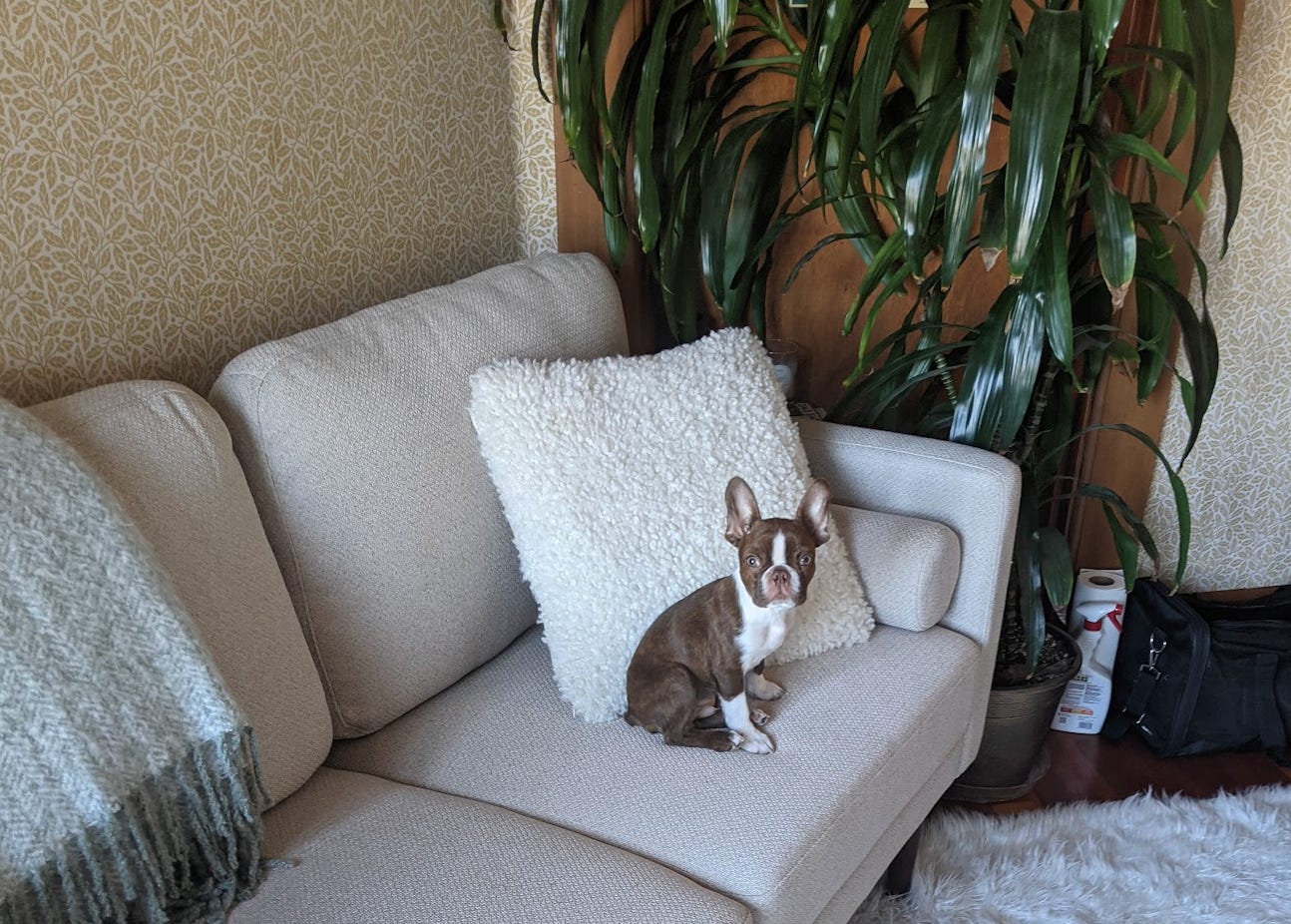
My former housemates and I are now scattered all over the world, leading wildly different lives. Some formed nuclear families and now raise children, others planted new roots in different cities. We all have one thing in common, though: Our years of coliving shaped us in ways we continue to benefit from today.
I caught up with several of my former housemates to hear more about how they design their “post-communal” lives according to the values and habits we learned while living together, stitching together several of those insights for this newsletter.
Celebrate your strengths, and remain curious about what others have to offer.
Our home was full of supportive, curious individuals—an environment that enabled us to lean into what we loved and create conditions to share it with one another. For example, I used to think writing was meant to be a solitary pursuit. But after several housemates asked me for help with their own writing projects, I began facilitating a weekly workshop series, “Wordsy Wednesday,” which I ultimately extended to members of our community beyond the household. And while I haven’t taken a science class since high school, I found myself learning about particle physics over morning coffee on more than one occasion.
This mindset persisted for many of us long after leaving the house. I’ve found myself embracing my own passions and skills with more authority and confidence, and approaching people I meet with a newfound curiosity. “I took a nugget of wisdom with me from every single person,” one housemate told me. “I still benefit from what I learned while I was living there.”

Delegate areas of ownership.
In our home, different people were responsible for different things. We called those “AOR”s, and we took them seriously, and we relied on each other to adhere to them. “If the internet broke, I knew exactly who to talk to; if we needed more Brazil nuts, it was my job to get them,” said a former housemate. Our community depended on each person owning their particular area of responsibility, and when balls were dropped, we held them accountable.
Many of my ex-housemates said that embracing an AOR system has made them more comfortable with delegating responsibilities in other aspects of their lives, be it on a work project or planning a group trip with friends. “It helped me learn how to not have my hands in everything at any given time,” another housemate said, “which removes so much of the logistical and emotional overhead.”
Tune into your own needs.
Counterintuitively, living with fifteen people made me a lot better at spending time alone. With so many people around all the time, I was forced to really listen to what my body needed, when it needed it, and carve out spaces that felt like special sanctuaries just for me (my bedroom was an obvious example, but I also loved drinking coffee on the roof early in the morning before others woke up).
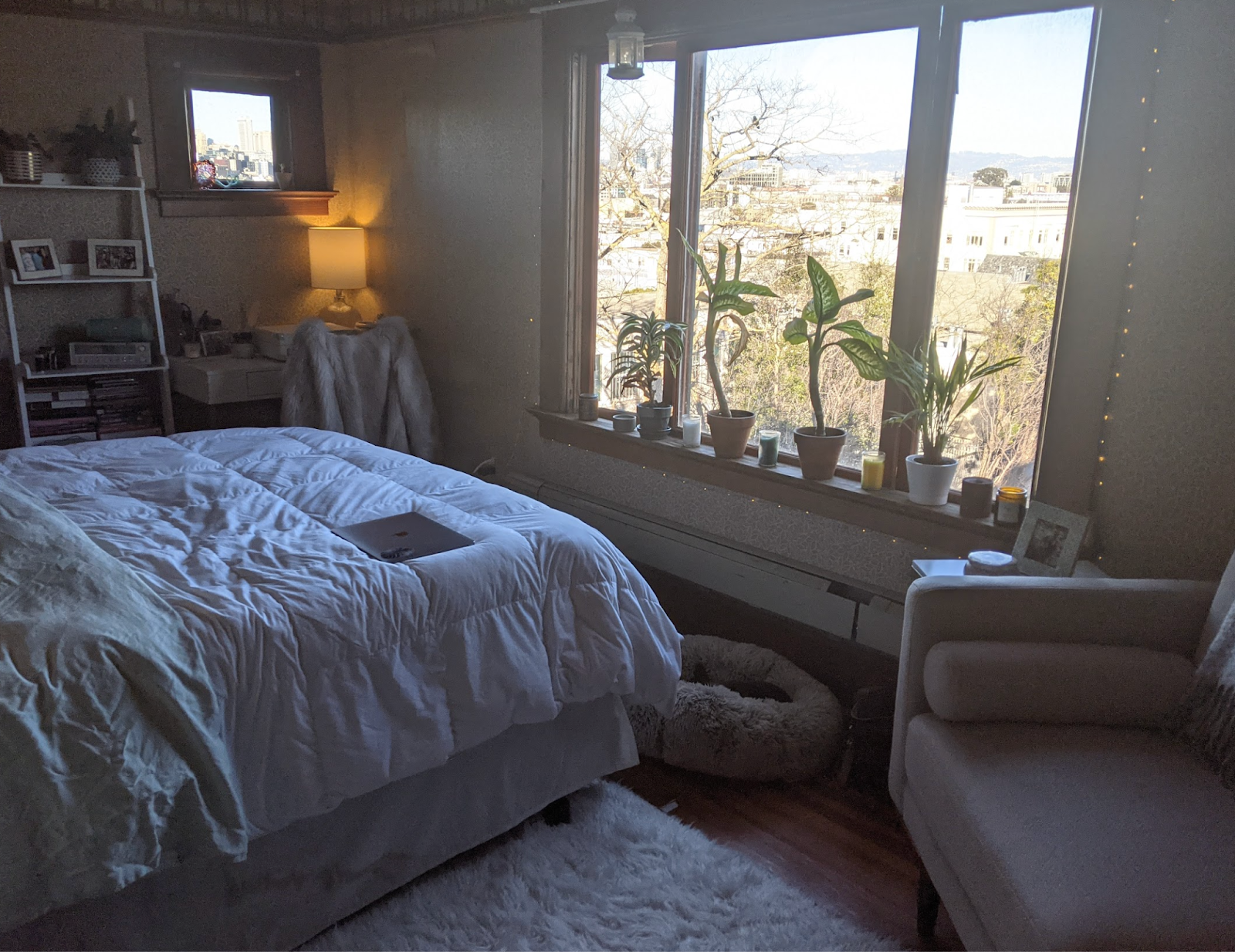
“In a communal environment, you learn so much about yourself and what you need,” one housemate explained, adding that in his own day-to-day life now, he’s much better at understanding when he has to set a boundary, carve out some alone time, or invest in other forms of self-care.
Replicate community in other ways.
Many of us got used to what one ex-housemate described as “ambient socializing”: the idea that you can walk out of your room at any time of day and choose your own adventure, be it a deep conversation or sitting on the kitchen couch listening to everyone else’s chatter. Before I moved out, I realized that I never wanted to lose the feeling of having other people I loved in my shared space, so I recruited one former housemate to move into a new apartment with me, and another to occupy the flat downstairs.
Our house might not swarm with the same level of activity, but we drop in and out of each others’ apartments with casual regularity, host shared dinners and movie nights, and hang out in our lush backyard. I relish the sound of the television humming in the other room while I’m falling asleep at night, which makes our home feel cozy and full.
Resolve conflict compassionately.
I’ve always been a conflict-averse people pleaser, but sharing 24/7 space with more than a dozen other humans makes disagreements inevitable. Our community had several frameworks for resolving conflict: we read books about nonviolent communication, attended an immersive full-day conscious leadership group, and held space for public “clearings” when certain tensions bubbled up to the house level.
Coliving made me less afraid of embracing conflict and more apt at resolving it compassionately. When you live with that many people, you become forced to evaluate disagreements from multiple perspectives, and it’s a breeding ground for empathy. I try to practice nonviolent communication and compassionate conflict resolution whenever an interpersonal issue arises, and I’ve noticed how productive this is when I’ve had hard conversations with other former housemates.
Bond over shared meals.
One of our home’s most celebrated traditions is our Monday Night Family Dinner, which still continues today within the house’s current iteration. Each week, housemates come together for a shared meal. We rotate cooking and cleaning duties, invite guests, and once a month, go around the table for an individual “check-in” shared at the group level.
These family dinners have made a lasting impact on many former housemates, in a number of ways. “I can close my eyes and cook for 25 people, no f*cking problem,” one person, who still loves to host large shared meals at her own house, said. “Check-ins really imprinted on me the idea that even if you think you’re struggling with something alone,” another said, “other humans are going through similar challenges.”
But sharing food with fifteen other people also stunts your growth in certain ways: “I never had to figure out what to cook or how to make a shopping list until I was in my late thirties,” admitted a former housemate. “Going to the grocery store is still not super comfortable to me!”
Cherish the depth of your relationships.
“It’s hard to get enough hours with new friends I make,” one ex-housemate told me, “after spending thousands of hours with the friends I lived with for so many years.” Living in a big communal house created conditions for closeness that I’d never before experienced outside my nuclear family. Identity becomes almost porous—it’s impossible not to let down your guard and soak people in.

In the years since leaving the house, I’ve come to cherish that depth, as have other housemates I spoke to. We go out of our way to spend time together when the opportunity arises: last summer, twenty of us converged in Reno, Nevada, from opposite corners of the country for a reunion. And the friends I made living communally are the kinds of people who can call me out of the blue, no matter the time of day, even if we haven’t spoken in multiple years, and our shared history immediately allows us to pick up right where we left off.
As a forty-year-old woman who doesn’t want children and deliberately designed her life to allow for spontaneity, travel, creativity, and close connections, I can’t imagine I won’t be living communally for many years to come. In fact, when I picture myself as an elderly woman in her sunset years, I almost always envision a situation where I’m surrounded by a huge crew of chosen family members across generations. But for now, “communal-lite” with an emphasis on all the lessons I learned in the house serves me well—even if it means I’m in charge of the grocery list more often.
 | A guest post by
|
I definitely understand the longing for more quietude, peace, and space/spaciousness. I’m also curious if you feel like there are benefits of such a large co-living/co-housing community (15+ ppl) which could function with more peace and space as an emphasis.
I would so so love to see co-living and co-housing (networks of co-living, etc) become more viable and attractive to the public and spread widely as a model to replace nuclear families, for many reasons. Do you still see this as desirable and possible?
Lessons and jam sessions! An unforgettable era.