

Editor’s note (Gillian): This is guest post from Nico Shi, who I first met in the context of CityDAO, met in person at Edge Esmeralda, and who co-wrote the Supernuclear case study on Mars College. Nico is building Agartha, a directory and incubator for Solarpunk communities intersecting art, ecology, and technology.
Agape, the subject of the case study below, was one of the first coliving houses I visited in San Francisco. It is an almost mythologically beautiful Victorian mansion, with gilded wallpaper and intricately carved mahogany staircases. I’m so glad to finally share a bit more context on its colorful past and inner workings thanks to Nico, who lived there for three months this year.

Name: Agape
Date founded: 2012
Location: Mission, San Francisco
Rented or owned: Rented
Amount of space: 13 bedrooms, 4 bathrooms, rooftop, garden, 2 balconies, 2 living rooms, basement rave cave, kitchen
Governance: Decision-making is flexible and case by case. Most decisions are handled by the relevant individuals or small groups, while higher-impact decisions are discussed as a house.
The Origin of Agape
The house is a Victorian mansion built in 1881 that’s seen many lives — from a family home to a care center for the mentally ill. In the 1970s, activists Leroy and Kathy Looper gave it the name Chateau Agape, filling the house with a spirit of love, resilience, and community that still lingers in the walls today.
The home is one of the oldest houses in the Mission. It was listed as a San Francisco landmark and part of the National Register of historic places.
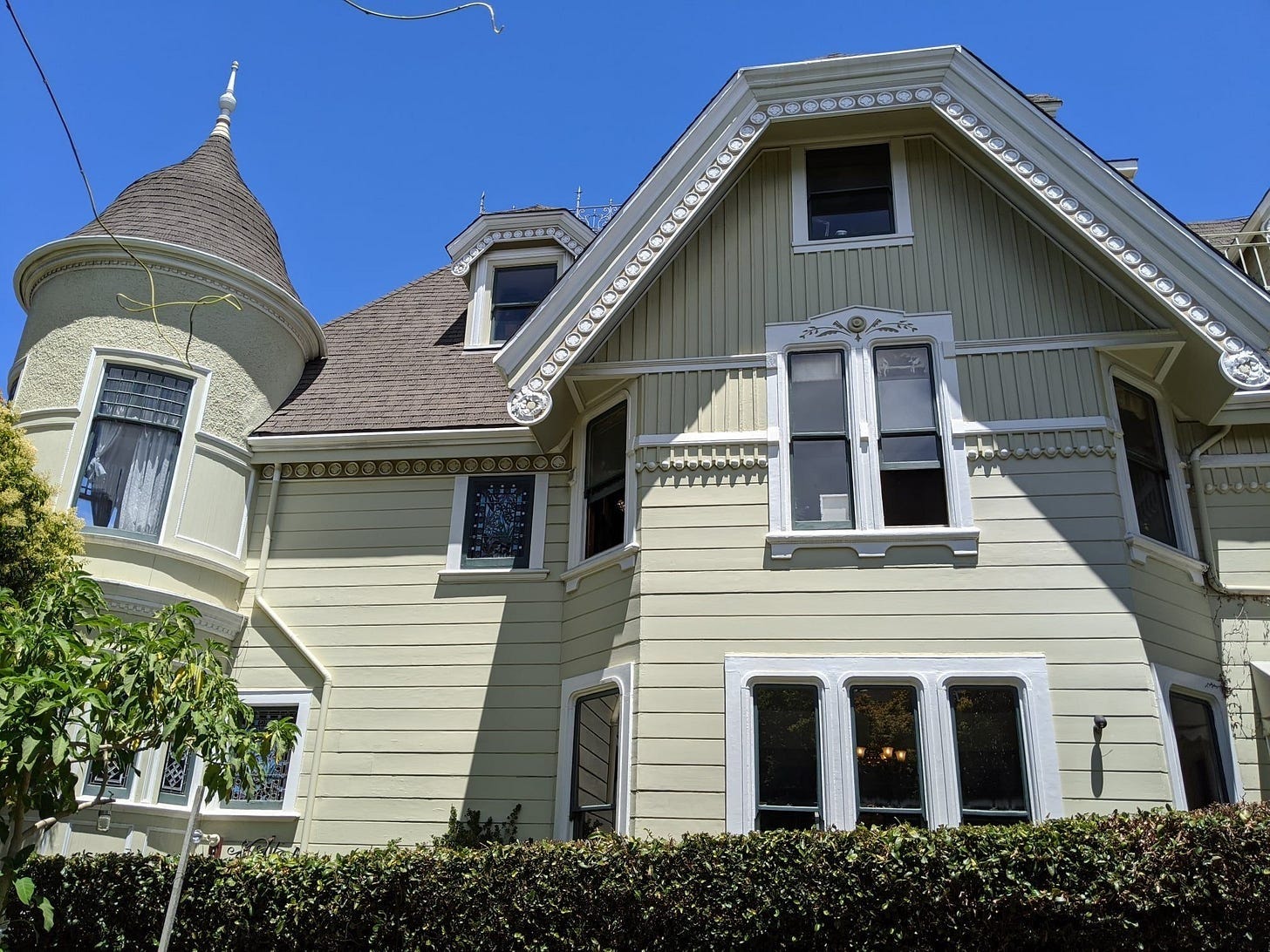
Decades later, a group of friends stumbled upon the house in 2012 and decided to carry that spirit forward. They named it Agape once again, as a living experiment in an intentional community. Since then, it has become a home where creativity, friendship, and togetherness can flourish.
Learn more about the detailed story here.
Ownership & Governance
Agape means “the highest form of love” in ancient Greek. This is pretty much reflected in the way Agapeans curate this special experience of living together. The governance and decision making process is collective by design. Everyone has a say among important decisions. Also, everyone has responsibilities in contributing to the process.
The process is rigorous, thoughtfully designed, actively respected, and executed with high integrity.
Becoming an Agapean 🎓
Agape has a wide friends & family network and some of them (such as myself) populate the space as subleasers.
To be a full-time resident, someone would have to sublease first as a trial period for 3 months. The roommates would then evaluate how you communicate: how you handle conflict, whether you’re clean, kind, interesting, caring... It’s a very comprehensive process.
You have to be approved by all roommates (there cannot be a ‘no’) AND you have to be given a ‘hell yes’ from at least one roommate. This gave Agape the reputation for being “highly selective”.
When I first heard about the application process, I thought, Oh God! It’s like you gotta pass an SAT test with flying colors and have extra credit just to live together? That sounds like a lot.
But after staying here, I really do get why. Living with people long-term is more like founding a company or entering a marriage than just renting a room. Being selective isn’t about exclusion — it’s about care for the wellbeing of the community. It’s like carefully tending a beautiful garden, making sure there is diversity, great culture, good soil, kind people, awesome energy all around. There’s only so many rooms to fill, and there’s all the reason to want to find the best match.
The Culture
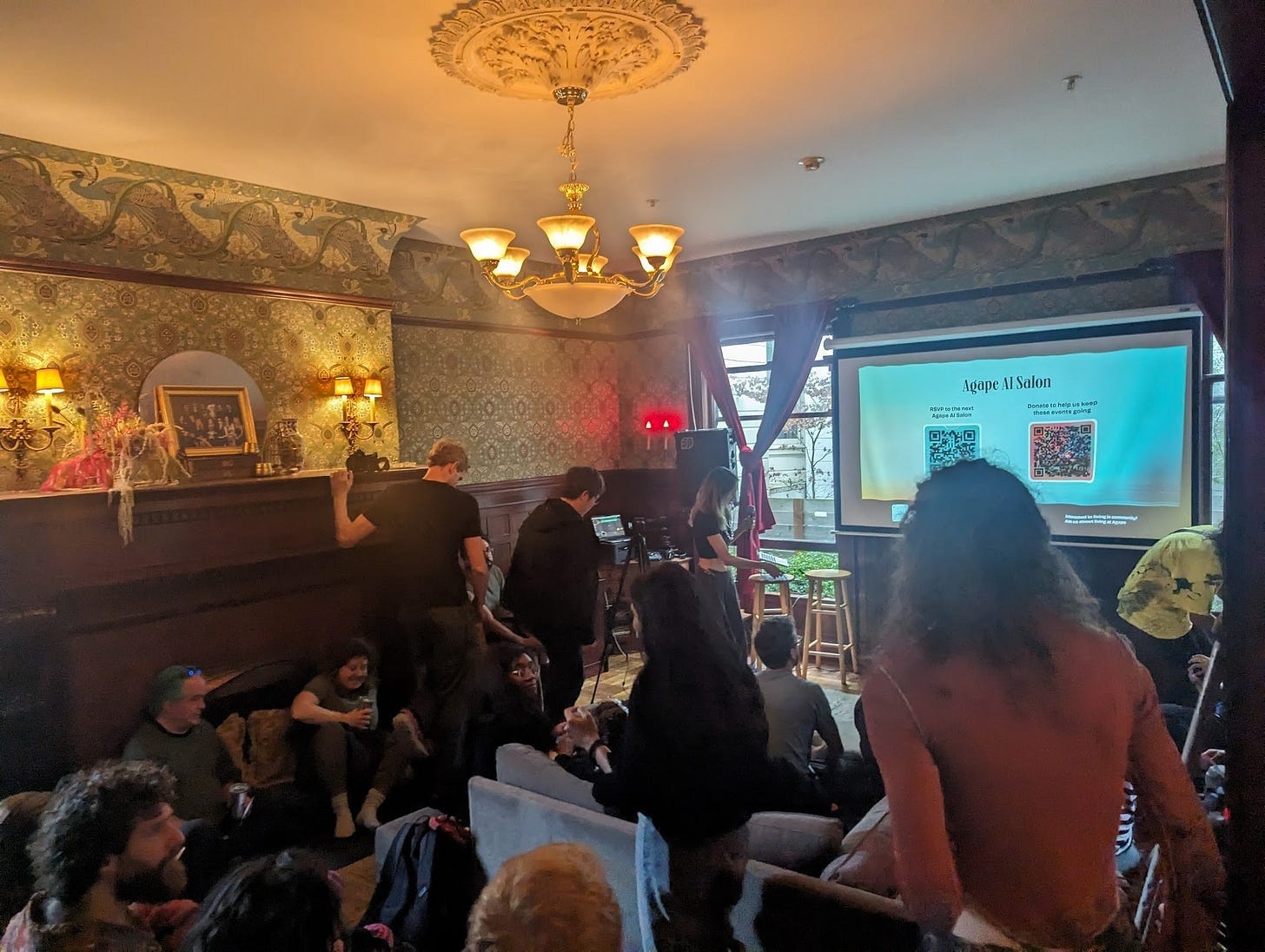
Agape doesn’t brand itself as a “hacker house” or “artist house” or “queer house”, but almost everyone is one of those things. Startups, AI, robots, musicians, artists, burners, performers, multi-talented builders... you name it. The shared ethos is simple: we want to live together intentionally, to do things together, and to care for one another like a family. —— said one happy Agapean
There’s also what I’d call a culture of sanity. Living together with a lot of people AND loving them is NOT an easy task, or a common phenomenon — I’ve been in situations where emotional drama devours entire afternoons. At Agape, people take responsibility for their own moods the way you’d take responsibility for doing your dishes. Emotional hygiene is as real as kitchen hygiene. That kind of awareness makes a home feel truly safe and cozy.
The house is not owned by the current residents, although the residents are in a great relationship with the owner. Other ways of ownership have been loosely discussed but it’s all very theoretical at the moment.
Spaces
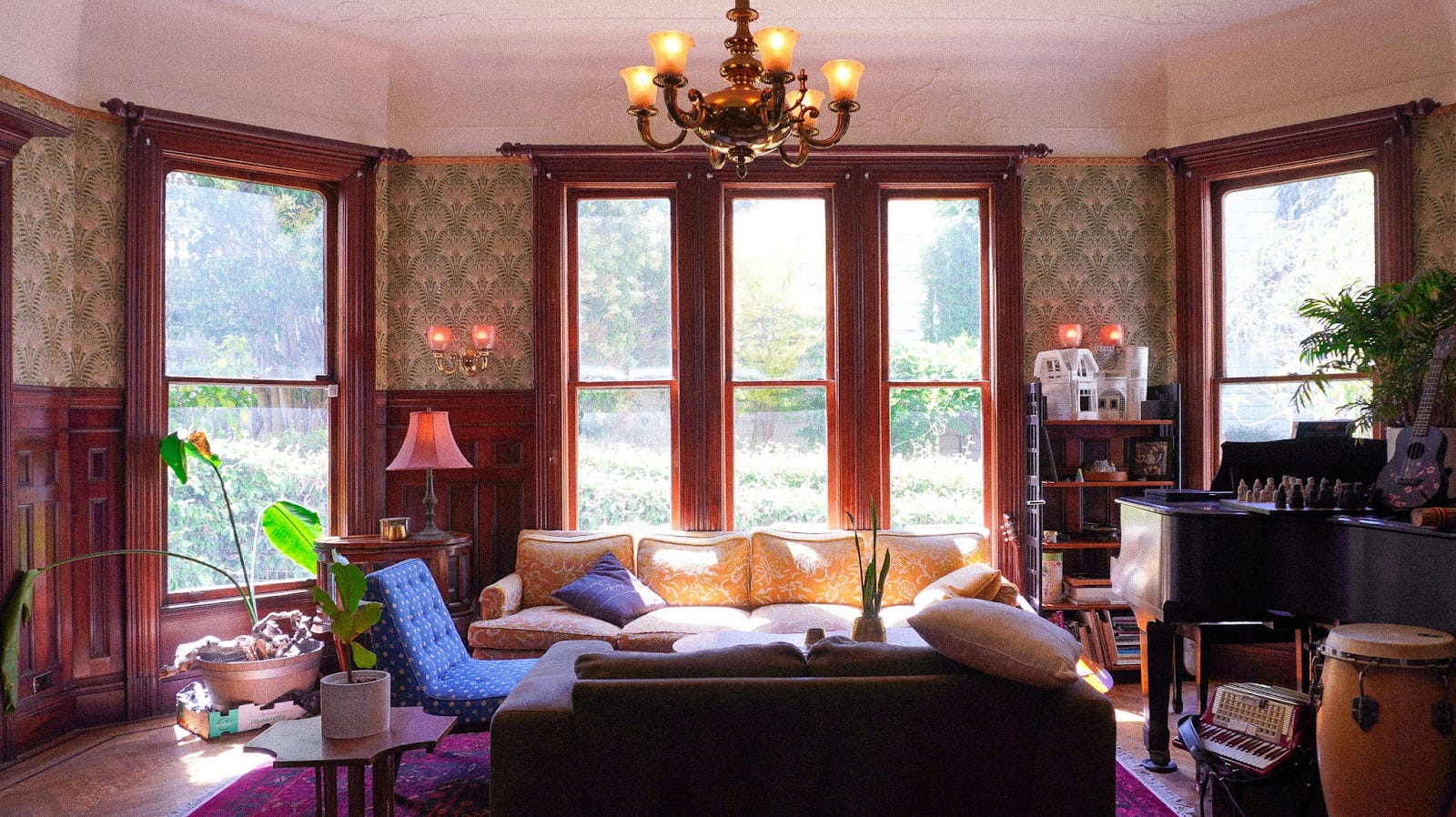
Agape has 4 floors, 13 bedrooms, a rooftop, multiple balconies, and a backyard garden. On the ground floor there is a big living room with many instruments, another lounge room (called ‘the Fluff’) with workout equipment, a fireplace, couches and mattresses, and a projector screen.
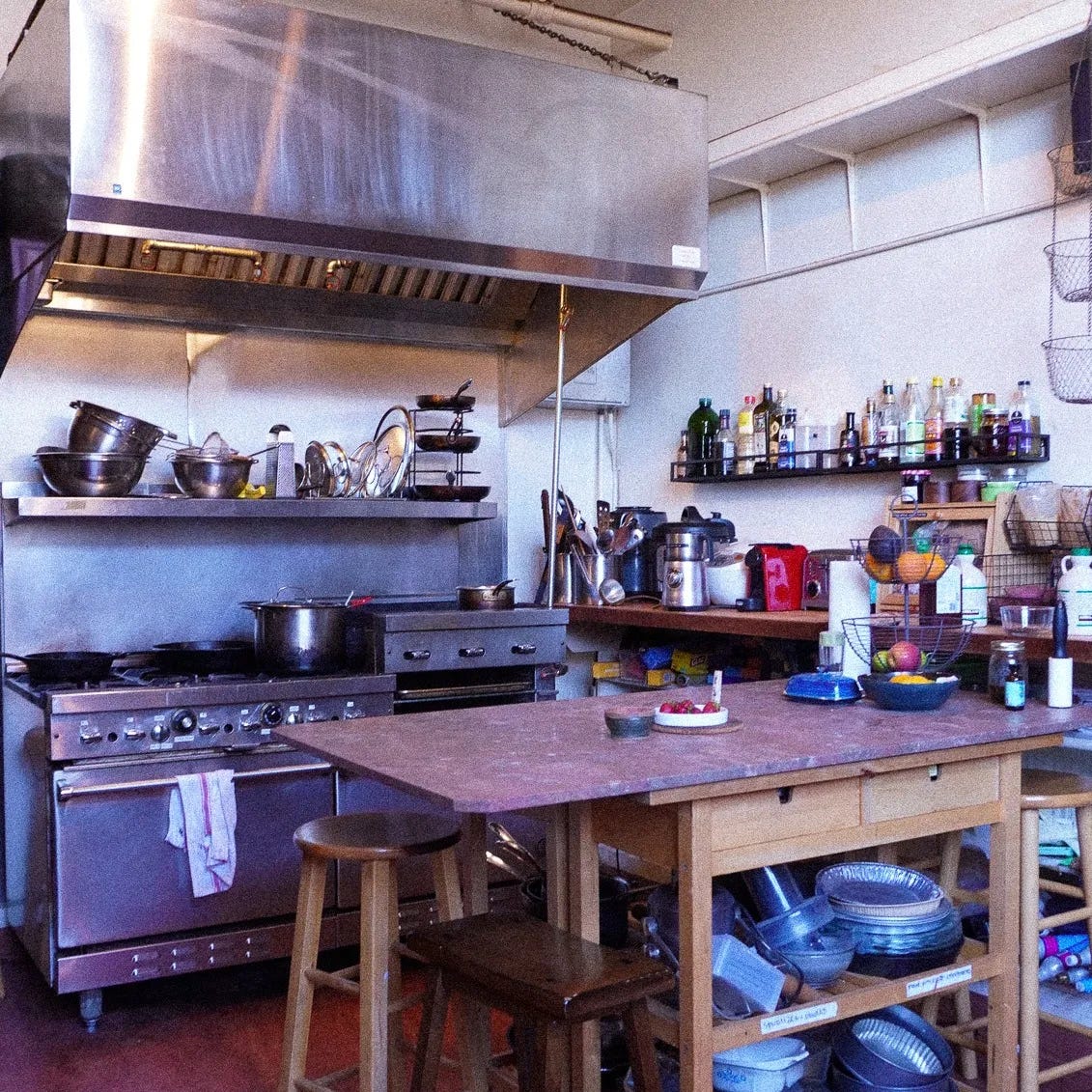
There is an industrial kitchen on the ground floor, operating as the heartbeat of Agape. Being a house with almost 20 people sharing the same kitchen, the fact that it’s always spotless speaks of how well functioning this place is.
The second and third floors are all for bedrooms, with shared bathrooms on each floor.
The basement has all the laundry facilities, storage, and has been turned into an EPIC party space, with great sound isolation, a DJ deck (that always works), and speakers of great quality.

Lifestyles
As glamorous and exciting as life can be, nobody’s perfect all the time. People here carry heavy responsibilities in their careers, have relationship turmoils, family tensions, health concerns. It’s not like you’re not allowed to have bad days.
What’s beautiful is how much people really show up for one another. The roommates feel safe enough to communicate when they need support, and are mostly met with a lot of generosity and warmth.
It’s the same with maintaining a great kitchen. We all forget to wash dishes at times, but if we do that all the time, the kitchen will never be clean in a communal home. If we get into a good flow of great sanity and very rarely forget a dish by accident, it’s not that big of a deal and can most likely be met with kind and loving reminders.
Communal Food
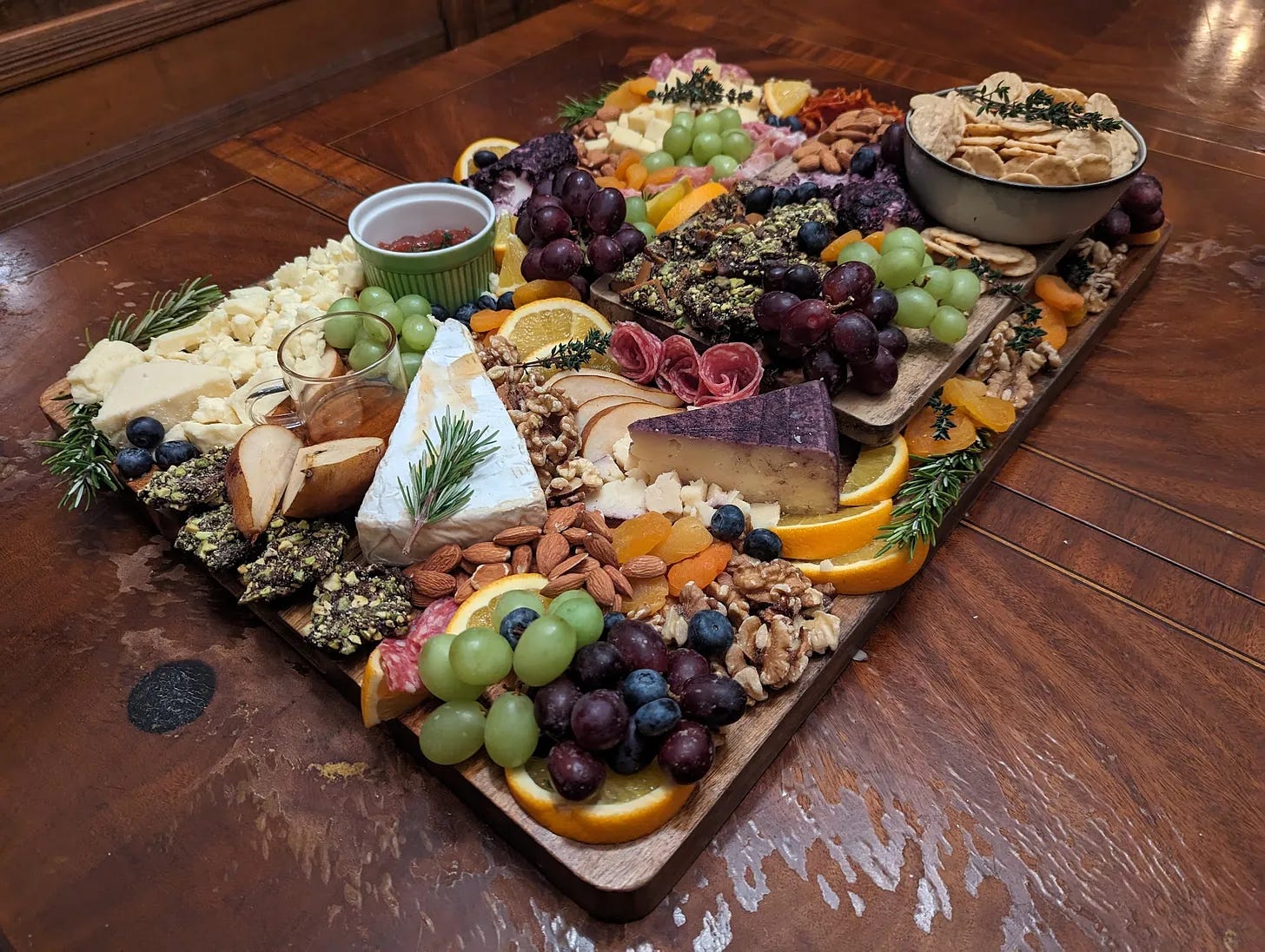
All food is shared. Each member contributes to the budget (around $250) for all inclusive vegetarian meals. Food is collectively ordered by a housemate twice a week, and anyone can make any ingredient requests. The pantry and fridge is always stocked, the spice storage has all kinds of spices you can possibly imagine.
It’s like every time we cook we’re just walking into a grocery store. There’s an infinite amount of ingredients to choose from. —— another happy Agapean
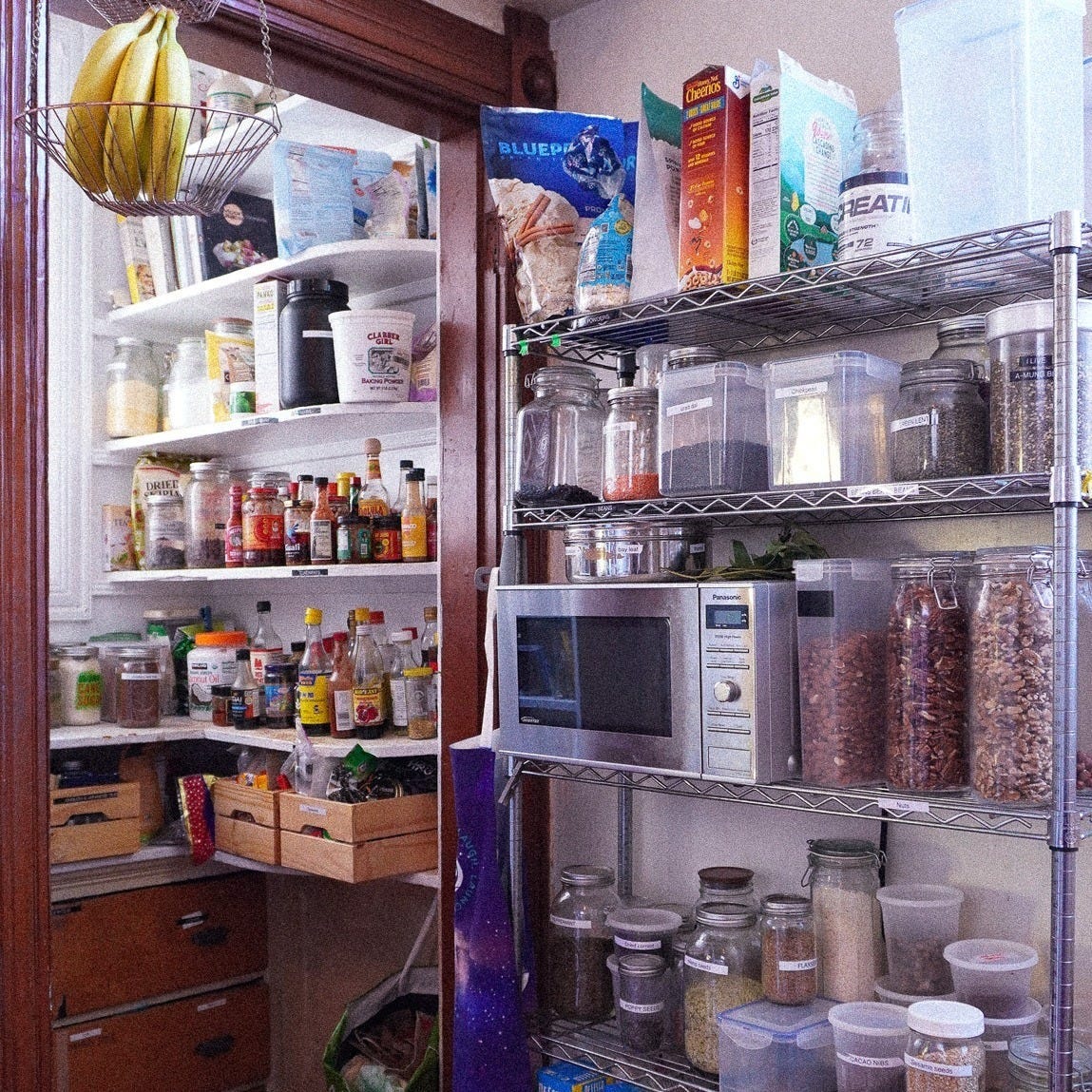
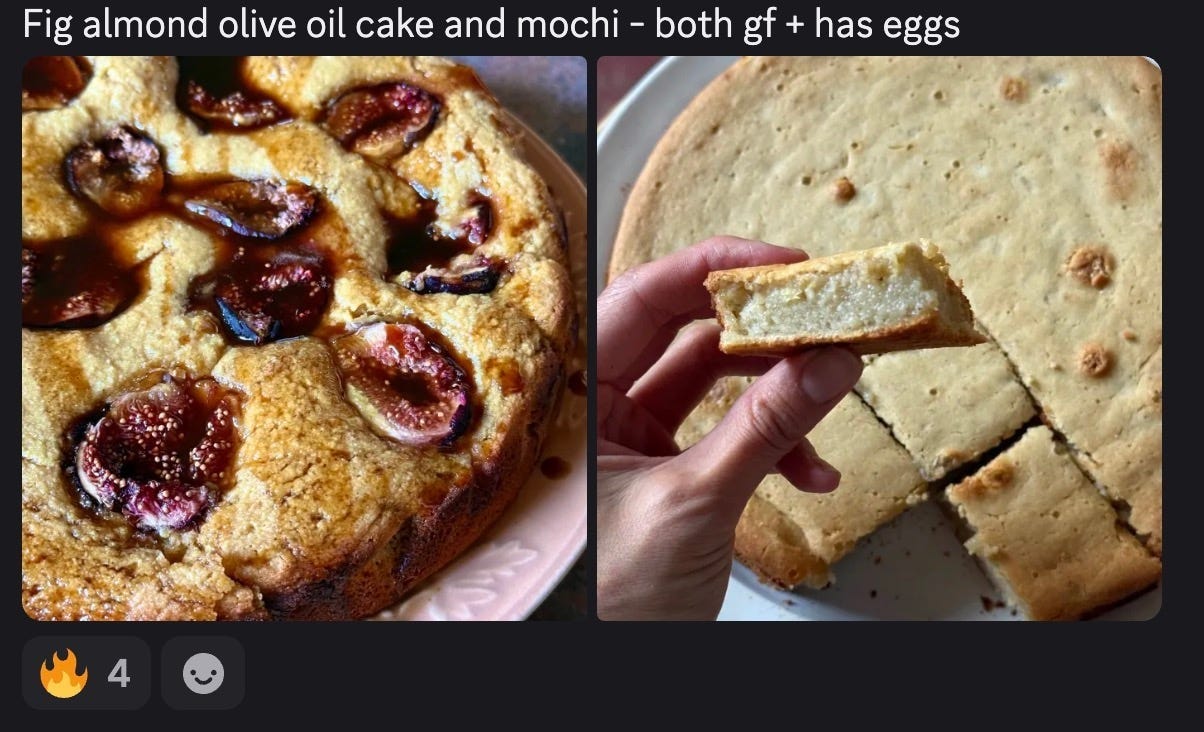
This way of living actively proves the idea of 1+1 > 2 in communities. If I were to live alone I would’ve never had that many options. When roommates cook they usually cook a big batch -- bean soups, morning oats, big salads, Tofu & eggs, lots of delicious gluten free baked goods... There’s almost always something warm waiting on the counter. Meals turn into small rituals of care.
The People & the Culture 🤸
The house runs like a cooperative ecosystem. There’s a plant caretaker, a trash manager, a food-ordering hero, a rent collector, a handy fixer, an expert organizer. The most demanding duties — Monday family dinner cooking, cleaning, ‘fluffing’ (meaning take out plates and utensils and setting up the table) , trash -- gets distributed over a spreadsheet with rotating duties that keeps the system fair, and the food is always healthy and ridiculously good.
Every community needs some sort of group ritual, a heartbeat, something to gather everyone together. Monday’s family dinner is that for Agape. Some days friends and neighbors join, and other days it’s for housemates only, so people get to share their intimate lives. The cuisines rotate depending on who’s cooking, and somehow a dozen busy lives pause long enough to keep the tradition going, and thriving.
The people here are quirky, passionate, inventive, very diverse and different. But the one thing in common is warmth, everyone here feels warm and caring in one way or another.
On paper, Agapeans look like any San Franciscans: founders, engineers, designers, health practitioners. For the after hours, the group is packed with activity: camping festivals, outdoor adventures, board games, collaborative art, crafting, and music, even Burning Man projects that take months of tinkering.

Agape Halloween 👻
The crown jewel of Agape culture is the Halloween party. Every year, the house transforms into an immersive festival. All furniture gets moved out, rooms morph into themed art installations, and the house fills with hundreds of costumed guests.
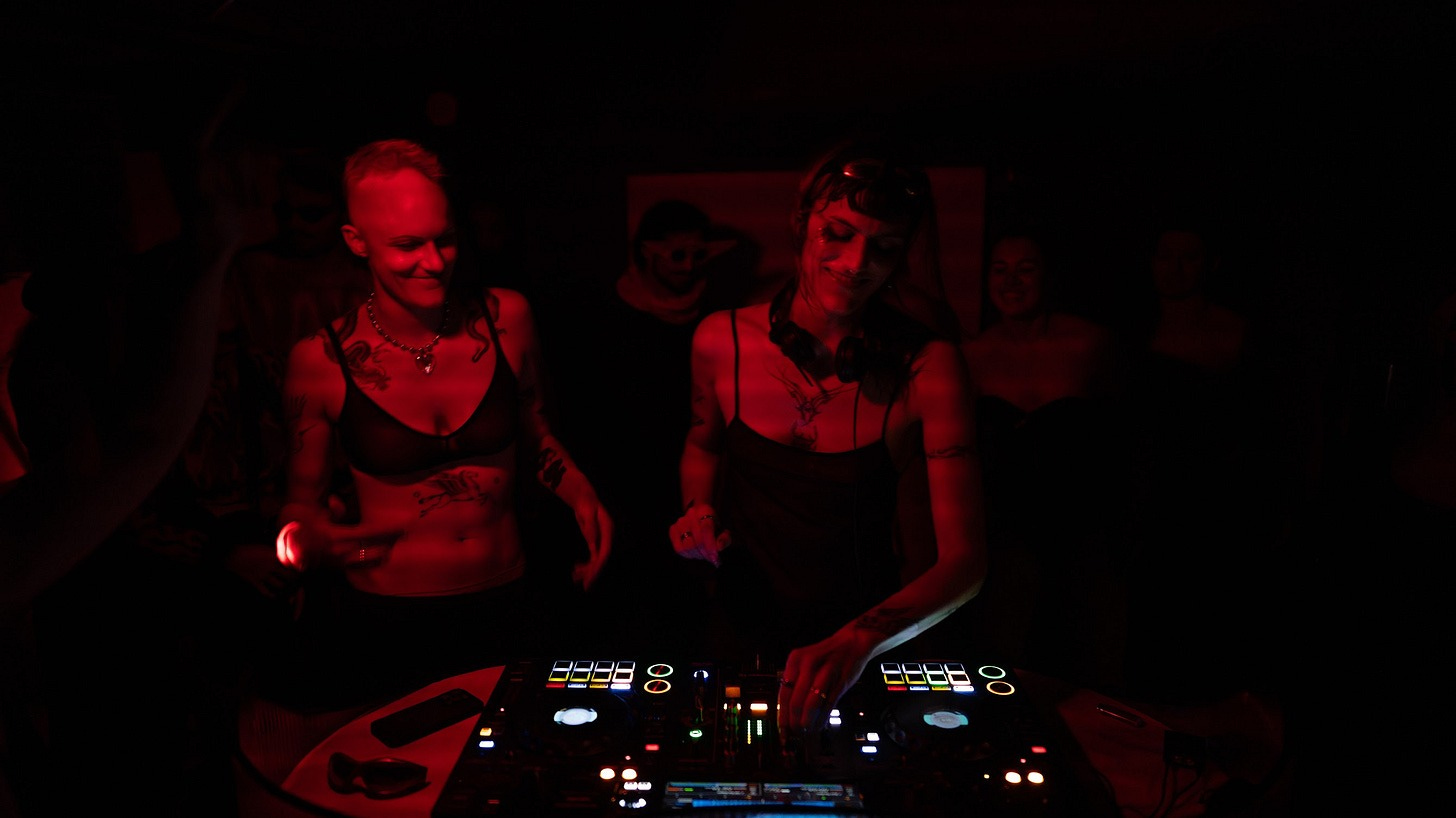
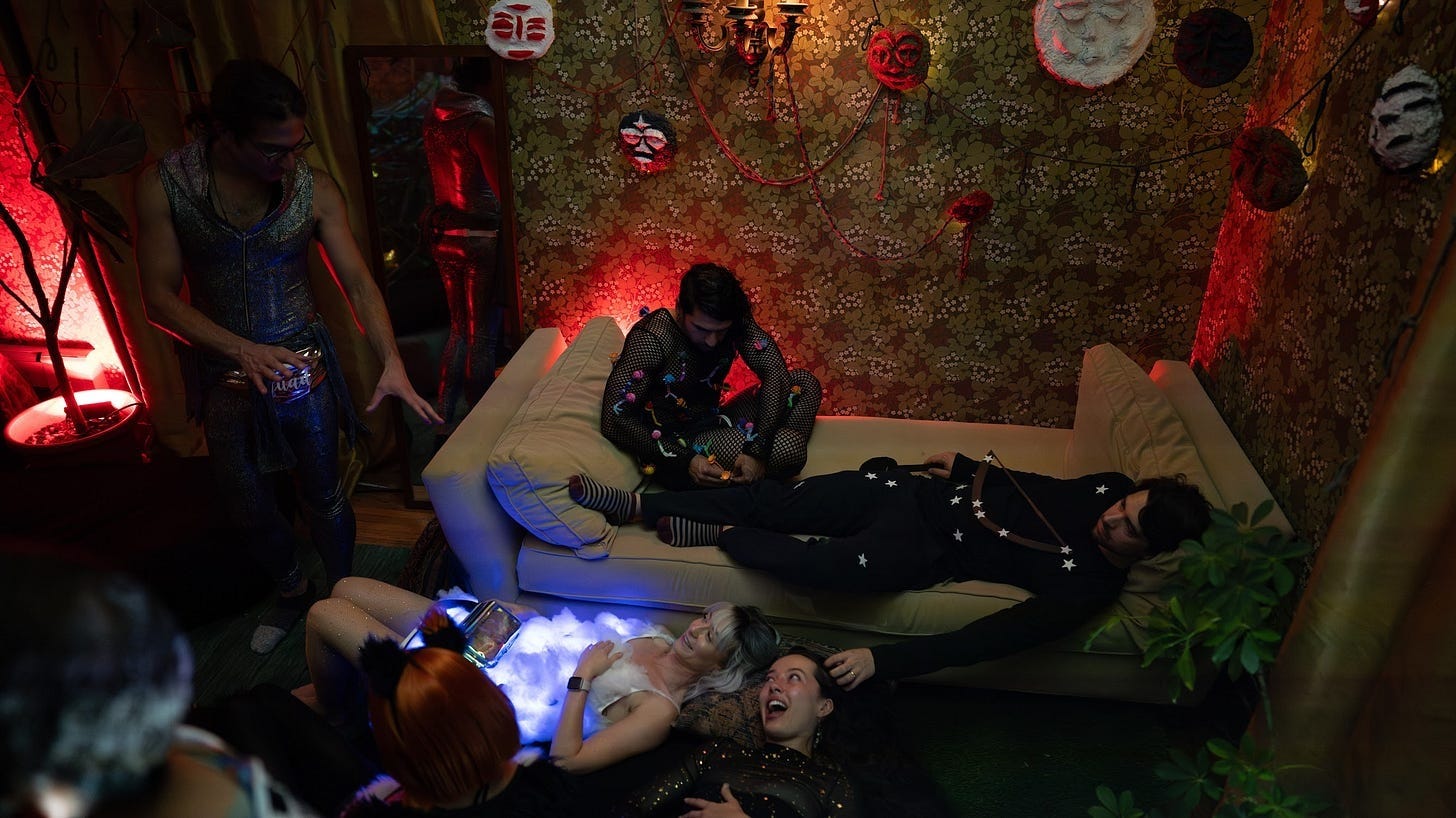
This year, the Halloween Party theme was Morphogenesis:
In morphogenesis, we see the power of collective intelligence. each part plays its role, and—somehow—a whole emerges. We follow the enduring wisdom of a blueprint, yet still leave room for variation and novelty. We witness how structure can arise from seeming disarray, if we coax the seeds to blossom.
The house started Halloween planning as early as July. The house invited local artists from the bay to come tour the house and come up with ideas.
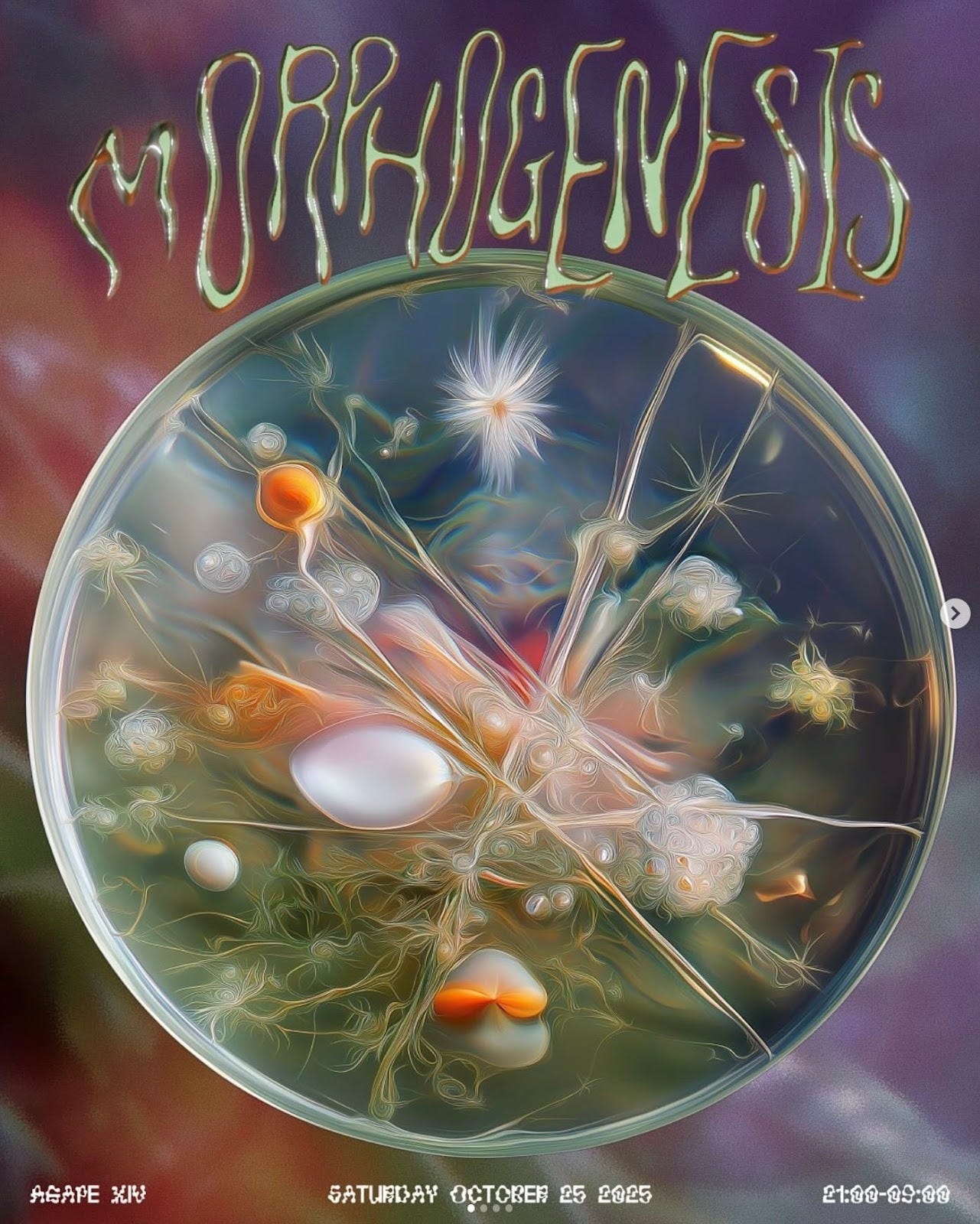
By the time this article releases, Morphogenesis already happened. Check out this instagram post to see how Agapeans transformed their spaces.
My Farewell
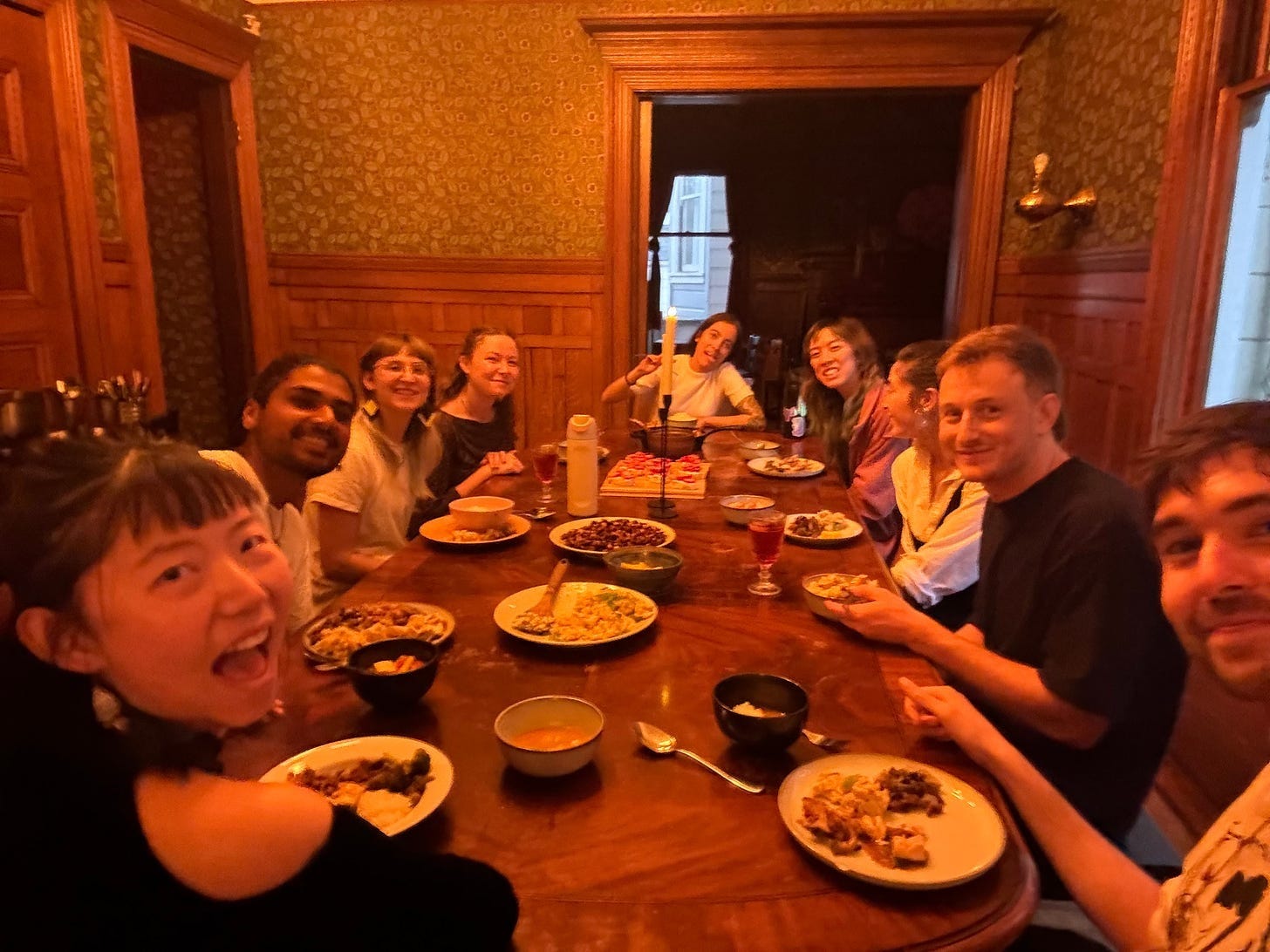
I started reading Ichigo-Ichie(一期一会), the essence is about treating every moment with ultimate sacred sincerely, because “this encounter will never come again”. I want to take this moment to deeply cherish all the beautiful memories created at this place, and give all the people here my best wishes for the future.
👉 Check out Agape’s Instagram to find out all details about Agape.
This post is part of an ongoing series of deep dives on coliving spaces. To see others, visit the Supernuclear directory. If you would like to contribute a case study of your community, awesome! Please find guidelines for submission in this post.

Thank you Nico for your work!! I have put on theDivineFeminineApp.com (as this is right in line with the Sacred Feminine, balance and a new world.) Inviting you to the app. Deep well wishes, caryn
Very cool post. Thank you. I have listed on the divine feminine app which has many resources of the new world such as this!